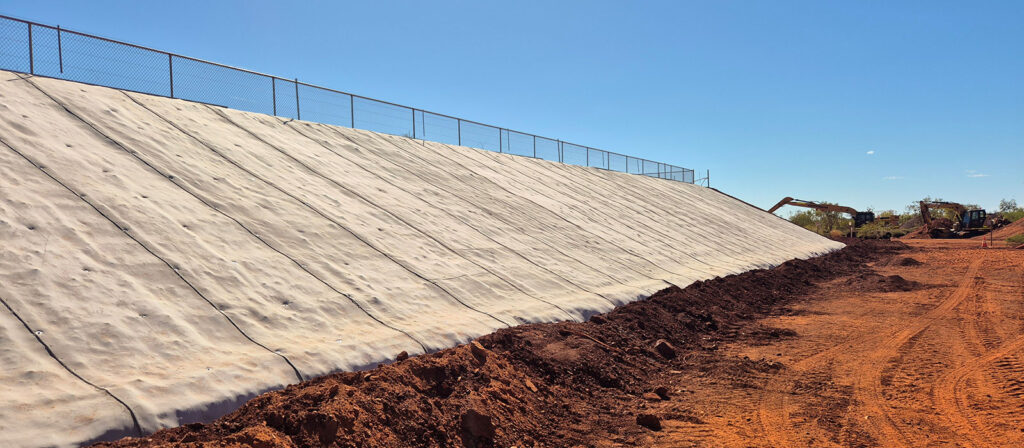
High-Performance Civil Infrastructure Deployment – Karratha, WA
In the harsh, arid environment of Karratha, Western Australia, protecting critical infrastructure from environmental degradation is a constant challenge. This case study examines the successful deployment of TREX 8mm Concrete Blanket to stabilize the slopes of a Turkey’s Nest dam, providing a modern alternative to traditional concrete methods.
Environmental Extremes and Logistics
Turkey’s Nest dams in the Pilbara region face significant threats, including extreme UV radiation, thermal expansion stresses, and intense rainfall during cyclonic weather events.
Key project challenges included,
- High Erodibility: The iron-rich, loose topsoils of the Karratha landscape are prone to washing away under high-velocity runoff, which destabilizes crest frameworks.
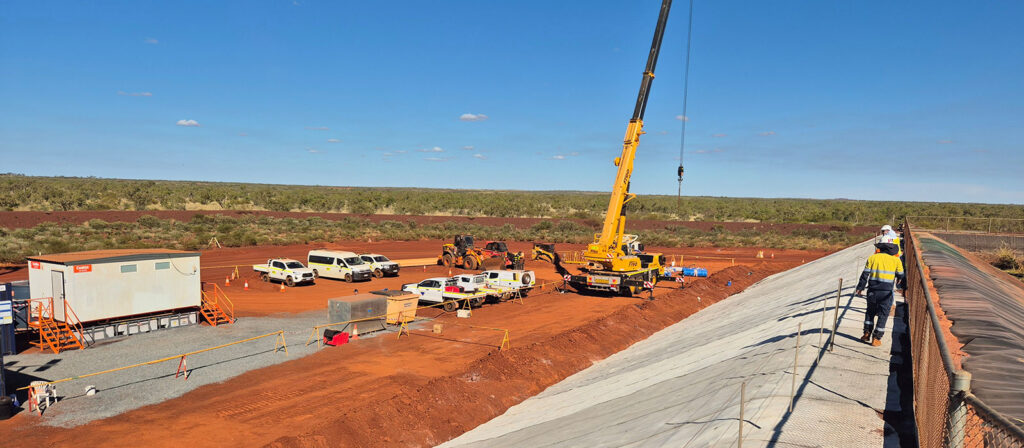
- Logistical Constraints: Utilizing traditional wet-mix shotcrete in remote locations presents significant logistical overheads and risks to material quality during transport.
To address these issues, the project team selected the 8mm TREX Concrete Blanket. This innovative technology features a custom-engineered, dry concrete mix embedded within a flexible, portable canvas matrix that hardens upon hydration. The 8mm profile was specifically chosen to provide an optimal balance between lightweight roll delivery and high compressive strength.
Execution Methodology by the Client
The installation company we worked with leveraged their specialized mining services background to carry out the installation using a highly efficient, sequential method:
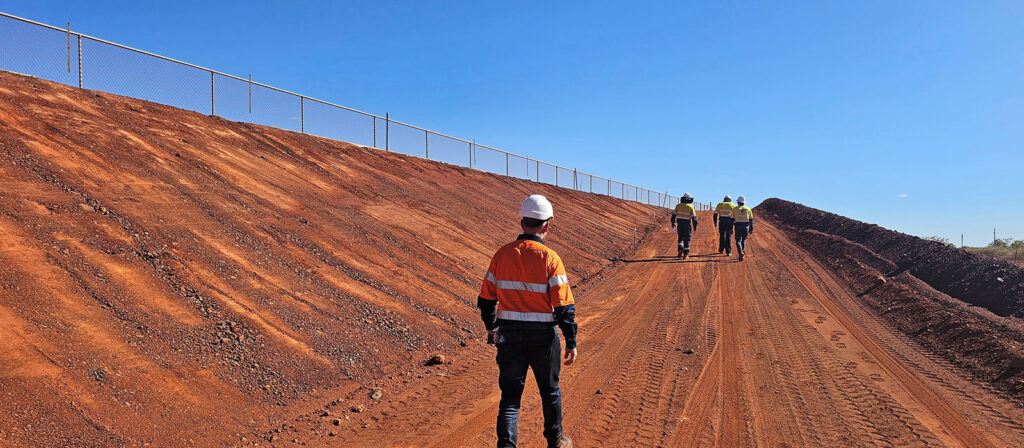
- Surface Preparation & Anchoring: The slope surface was first graded smoothly. To protect the edges against undermining from rain or wind forces, the contractor excavated dedicated anchor trenches along the top crest and toe.
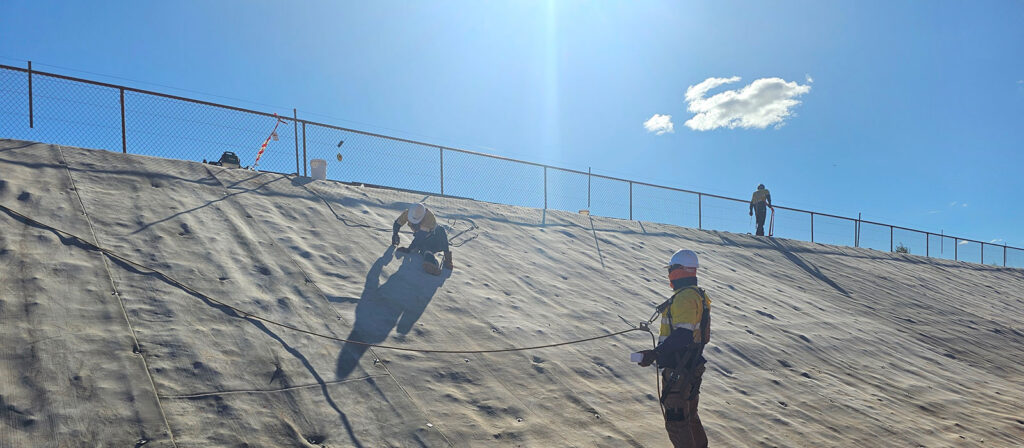
- Deployment: Sections of the TREX blanket were rolled vertically down the embankment.
- Alignment: The panels were meticulously aligned at the lap joints to ensure they would not shift during the hydration phase.
- Hydration Curing: A systematic water mist was applied across the fabric surface, which triggered the internal cement crystallization phase to achieve final structural hardness.
Results and Strategic Value
The collaboration between TREX and our client achieved several core engineering goals for the project:
- Timeline Savings: The use of fast roll-out installation reduced the total equipment allocation hours compared to the multi-day staging required for continuous shotcrete.
- Durable Armoring: Once cured, the 8mm sheet forms a hard, durable shell over the earthwork, effectively eliminating issues related to soil shifting or operational failure.
- Sustainability: The project serves as a modern example of reliable and sustainable civil asset protection within the demanding mining environments of northern Western Australia.
The primary advantage of this material over traditional methods, like poured concrete or shotcrete, is the shift from a “wet-mix” process to a “dry-deploy” process.
Traditional Shotcrete
This method typically requires heavy, continuous equipment allocation, involves significant logistical overhead to move wet concrete to remote sites, and carries high risks of quality loss during transportation.
TREX Concrete Blanket
This technology relies on a dry, pre-mixed concrete material integrated into a flexible matrix. It is transported as rolls and hardens only after being unrolled and hydrated with a water mist.
Understanding the Structural Mechanism
The effectiveness of this slope protection system relies on how the material interacts with the landscape:
- Anchor Trenching: By digging dedicated trenches at the top crest and toe, the installation prevents the blanket from being undermined by wind or high-velocity water runoff.
- Interface Protection: The blanket creates a seamless, durable, and hard-shell armor that prevents the iron-rich, loose topsoils of the Karratha region from shifting or eroding.
- Systematic Curing: Once the fabric is hydrated, the internal cement crystallization phase creates a permanent, structural barrier that requires very little ongoing maintenance compared to soft-soil stabilization methods.
By utilizing this method, projects in the Pilbara can overcome the “high erodibility” of local topsoils while significantly reducing the hours needed for on-site equipment operation.